AI-Assisted Buyer Personas: Evidence to Messaging Fast
What a “perfect” buyer persona looks like in practice
A “perfect” buyer persona isn’t the most detailed profile—it’s the most usable. The best personas act like decision tools that influence what you say, how you say it, where you say it, and what you offer. If a persona doesn’t change copy, creative, targeting, or product positioning, it’s usually too vague (or too fictional) to matter.
High-utility personas prioritize what drives action: goals, obstacles, triggers, and decision criteria. Demographics can help with media placement and tone, but they rarely explain why someone buys or why they hesitate. A persona that captures the buying context—who initiates research, who approves budget, and which risks feel unacceptable—makes it easier to craft messaging that reduces friction.
To keep personas measurable, tie them to real behaviors: likely channels, preferred content formats, and conversion events (newsletter signup, product comparison page views, demo requests, cart adds, repeat purchases). This turns personas into something you can test and refine instead of a document that collects dust.
The AI-assisted persona workflow (from raw data to messaging)
1) Collect inputs that reflect real intent
Start with sources that capture customers in their own words: interviews, reviews, support tickets, call transcripts, on-site search terms, and CRM notes. These inputs contain the phrases people use when they’re motivated, confused, skeptical, or ready to buy—exactly the language that should shape your pages and ads.
2) Cluster patterns without losing nuance
AI is especially strong at organizing messy inputs into themes: recurring pains, desired outcomes, objections, and the exact words that show up repeatedly. The key is to cluster by “job to be done” and constraints (time, budget, switching cost), not by superficial traits.
3) Draft persona hypotheses (2–5 segments)
Use AI to propose a small set of distinct segments. Each segment should have a unique motivation and a clear buying constraint. If two personas would respond to the same promise, proof, and offer, they probably don’t need to be separate.
4) Validate quickly with reality checks
Spot-check each persona with evidence: real quotes, analytics (top pages, drop-off points, on-site searches), and sales/support feedback. This is where you confirm that the segment is more than a clever summary—it’s a reliable pattern you can market to.
5) Translate into actions your team can ship
Turn each persona into campaign-ready assets: positioning statements, offer angles, and content topics. Pair every claim with a “next-best action” (what page to build, what email sequence to write, what objection to handle first) so the persona immediately improves execution.
Questions that shape high-utility personas
Strong personas come from strong questions. These are the prompts that tend to produce profiles that are specific, testable, and useful across channels:
- Outcome: What does success look like in 30 days and in 6 months?
- Pain: What’s the cost of doing nothing—time, money, reputation, stress, or missed opportunities?
- Triggers: What events push them to search now (new role, budget cycle, compliance, seasonality, life change)?
- Objections: What stops them—trust, complexity, price, switching cost, internal approval?
- Decision criteria: What features, proof, and guarantees matter most?
This approach aligns well with intent-driven behavior research like Google’s “micro-moments,” where people look for fast answers that reduce uncertainty and risk in-the-moment (Think with Google: Micro-Moments).
AI vs. manual persona building: where each method shines
A practical rule that keeps things honest: use a traceability standard. Every key claim in the persona should be linkable to a real data point (a quote, ticket, review, or analytics insight). This mirrors UX best practices around personas being simple, evidence-based tools—not fictional characters (Nielsen Norman Group: Personas—A Simple Introduction).
Persona-building approaches at a glance
| Approach | Best for | Strengths | Watch-outs |
|---|---|---|---|
| Manual interviews + analysis | Deep understanding, complex B2B decisions | High accuracy, rich context, strong quotes | Slower, limited sample size |
| AI-assisted clustering and drafting | Speed, multiple segments, message variations | Fast synthesis, consistent structure, scalable | Can amplify weak inputs; needs validation |
| Hybrid (AI + evidence review) | Most teams and use cases | Balanced speed and reliability | Requires a repeatable process and ownership |
Common persona mistakes that quietly reduce performance
Persona research doesn’t have to be complicated, but it should be disciplined. A clear method like HubSpot’s buyer persona process is a helpful reference point for keeping research and validation practical (HubSpot: How to Create Buyer Personas).
Turning personas into campaign-ready assets
A ready-to-use framework for building AI-supported buyer personas
Recommended digital downloads
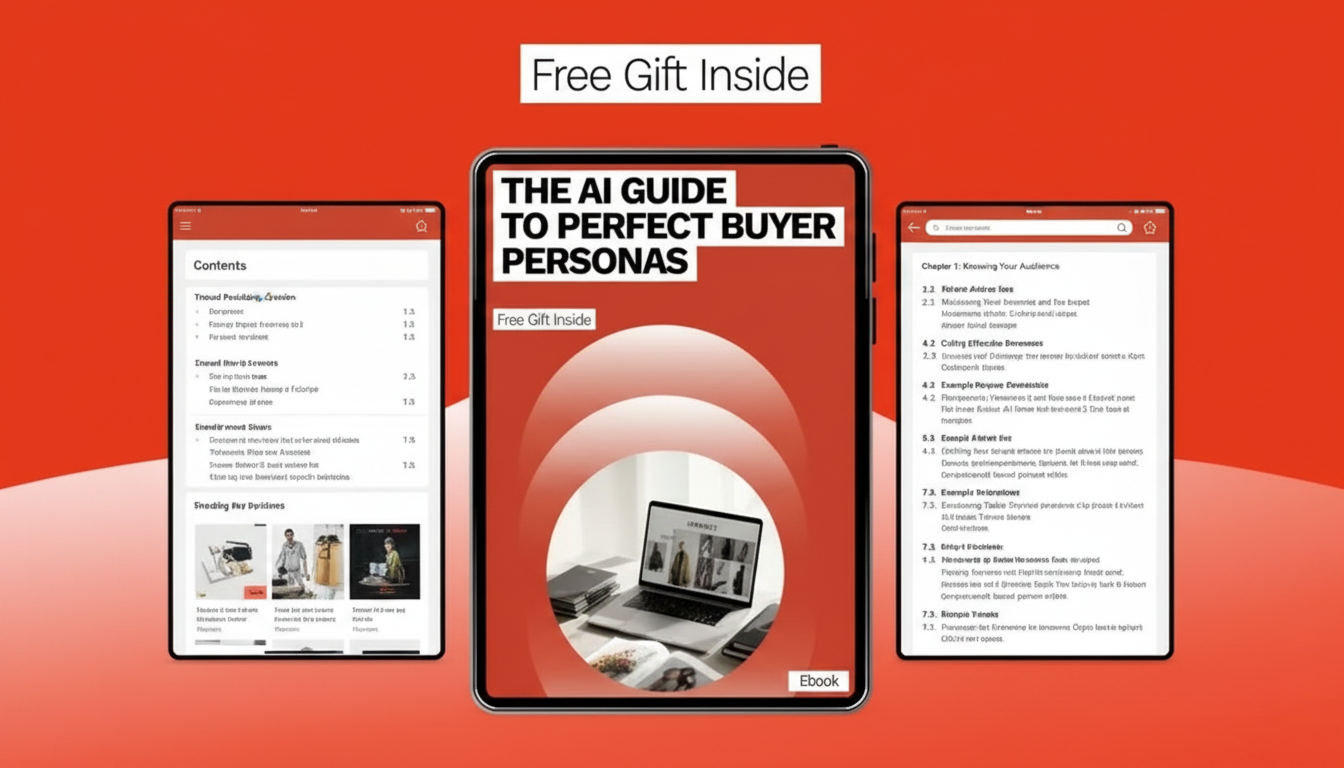
- The AI Guide to Perfect Buyer Personas (digital download) — A repeatable, AI-assisted workflow for turning real customer evidence into clear segments, validation steps, and campaign-ready messaging.
- Car Safety Inspections eBook: Ultimate Guide for DIY Checklists, Tools, and Tips — A checklist-driven digital guide that’s useful when creating DIY-focused personas for automotive or maintenance-related offers.
FAQ
Do AI-generated buyer personas replace customer interviews?
No. AI helps synthesize and draft personas quickly, but interviews, reviews, support tickets, and sales notes are what validate accuracy. A reliable hybrid is to let AI propose segments and then spot-check each claim against real quotes and behavior data.
How many buyer personas should a small business have?
Start with 2–3 core personas tied to clearly different motivations and decision criteria. Add more only when messaging, offers, and targeting truly diverge—and performance data shows the split improves results.
What data is most useful for building buyer personas quickly?
High-signal sources include reviews, support tickets, sales notes, call transcripts, on-site search terms, and top converting (and highest drop-off) pages. AI can then cluster themes and extract repeated language so personas reflect how customers actually describe their needs.











Leave a comment