Day-Trip Diaper Bag Checklist: Pack Smart, Stay Calm
Ready, Set, Day Trip: A Diaper Bag Checklist for Calm, Confident Outings
Day trips with a baby get easier when packing is predictable. A simple checklist reduces last-minute scrambling, helps avoid overpacking, and keeps essentials reachable when diapers, hunger, or weather changes hit. Use this structure to build a grab-and-go diaper bag system that works for parks, errands, short drives, or all-day family adventures. For more guidance, see Baby Travel Essentials + FREE Checklist – Healthnut Nutrition.
A day-trip packing mindset that prevents overpacking
The goal isn’t a diaper bag that can survive a week—it’s a bag that handles the most likely needs without turning every outing into a shoulder workout. The easiest way to get there is to pack in “modules” so you can swap items based on the plan. For further reading, see Travel Packing List for Mom, Baby, and Toddler.
- Pack in modules (diapering, feeding, comfort, weather). When plans change, you won’t forget an entire category.
- Duplicate only what prevents a meltdown: one backup outfit and one extra feeding option are usually enough for day trips.
- Keep an always-ready core kit in the bag; add destination-specific items (swim gear, museum snacks, stroller fan) as a top layer.
- Place high-urgency items in an outer pocket (wipes, one diaper, disposable bag) for true one-handed access.
- Do a 2-minute reset after each outing: restock diapers/wipes, replace used bags, and swap out snacks so the bag is ready next time.
Day Trip Diaper Bag Essentials Checklist (by need)
| Category | What to pack | Quantity guide | Quick notes |
|---|---|---|---|
| Diapering | Diapers, wipes, changing pad, diaper cream, hand sanitizer | Diapers: 1 per 2 hours + 2 extra | Add dog-waste style bags or wet bags for messes |
| Clothing | Spare outfit, socks, light layer, bib | 1 full outfit minimum | Choose easy-on pieces for car or stroller changes |
| Feeding | Bottle(s) / formula or pumped milk, nursing cover, burp cloths, snacks, water | 1–2 feeds more than expected | Bring a small cooler pack if needed |
| Comfort & sleep | Pacifier, teether, small comfort item, stroller shade/cover | 1–2 comfort items | Duplicate pacifier if it frequently gets dropped |
| Health & safety | Baby-safe sunscreen (if appropriate), hat, insect protection, thermometer, basic first-aid | Mini kit | Check age guidance for sun/insect products |
| Cleanup | Extra wipes, paper towels, stain wipe, spare shirt for caregiver | A few of each | A spare adult top is often the most-used “extra” |
| Weather & environment | Rain cover, blanket, fan, extra layer, umbrella | Seasonal | Pack for one weather swing colder/warmer than forecast |
| On-the-go tools | Portable changing clutch, clip-on toy, phone charger, cash/card | As needed | A slim power bank prevents navigation and contact issues |
Essentials, expanded: what earns a spot in the bag
Once the categories are clear, it’s easier to decide what truly earns its keep. Think “solves a common problem fast” rather than “might be nice.”
- Diapering core: diapers, wipes, barrier cream, a portable changing pad, and disposable bags or a wet bag for messes. Add a spare onesie for blowout recovery.
- Feeding support: burp cloths, a bib, bottle/nursing supplies, and a measured formula option if used. Include one “fast” snack (or age-appropriate option) to prevent a hunger spiral.
- Comfort toolkit: pacifier/teether, a small toy, and a lightweight blanket that can act as shade, warmth, or a clean surface.
- Caregiver essentials: water, a snack, phone charger, and a slim wallet—staying regulated helps your baby stay regulated.
- Clean hands plan: hand sanitizer and extra wipes placed where they can be grabbed before touching car seats, strollers, or public surfaces.
For food and bottle safety on the go, follow practical handling guidance from the U.S. FDA’s food safety tips for parents and caregivers, especially for warm-weather outings.
Adjust the checklist by trip length and destination
A two-hour grocery run doesn’t need the same loadout as a full-day zoo visit. Use time away from home and the environment to scale up or down.
- Short errand (under 2 hours): diapering basics, one feeding backup, and a comfort item—keep it light for easy carrying.
- Half-day outing (2–5 hours): add an extra outfit, additional snacks/feeds, and weather protection (hat, layer, rain cover).
- Full day (5+ hours): plan for nap support (stroller shade/cover), a second feeding method if possible, and a stronger cleanup kit (wet bag, stain wipes, extra shirt for caregiver).
- Outdoor-heavy destinations: prioritize sun/bug protection, water, and a blanket for picnics; consider a small towel for unexpected splashes.
- Indoor destinations: bring a compact toy and a quiet snack strategy; keep changing supplies quick-access for tight restroom spaces.
For sun exposure basics that apply to the whole family, the CDC’s sun safety guidance is a helpful reference when planning outdoor time.
Packing layout that makes changes faster
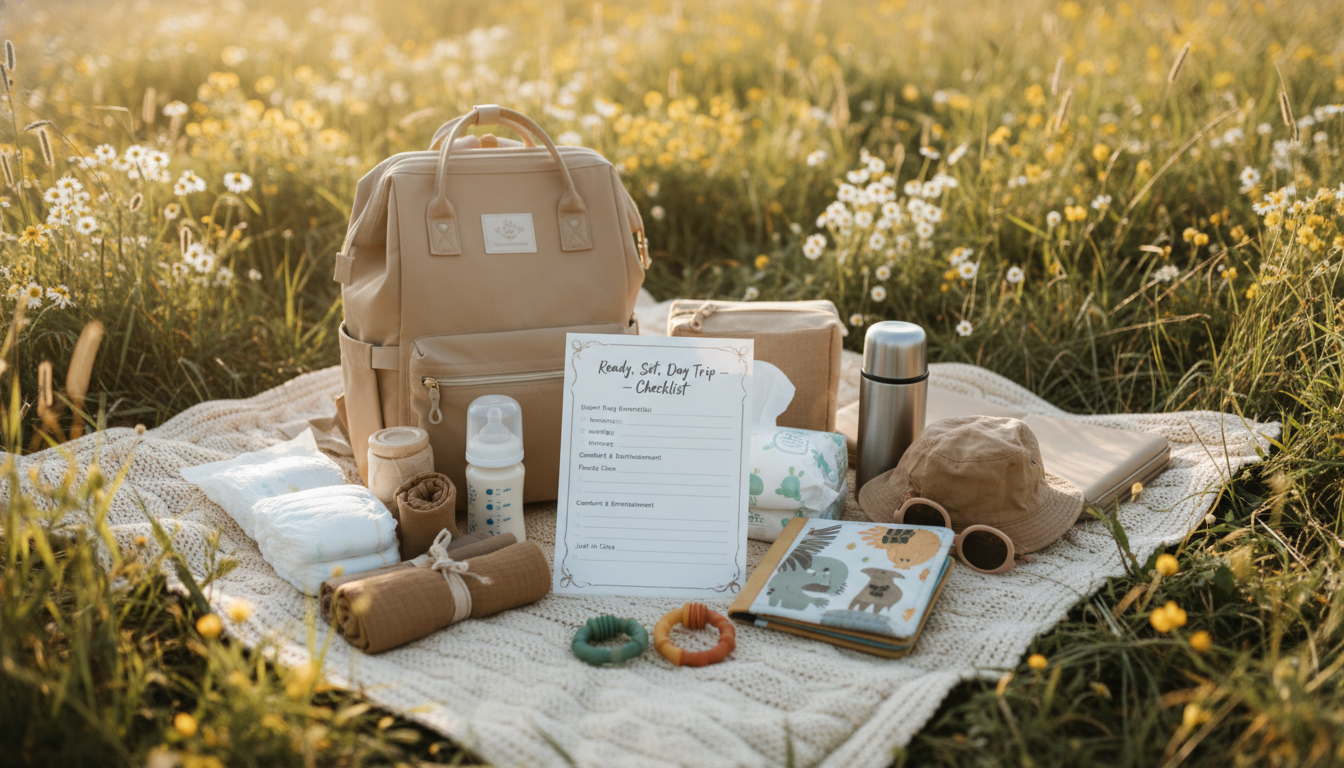
Using a printable checklist for consistent, stress-free resets
If you want a ready-made, grab-and-go version, see the Ready, Set, Day Trip checklist download. For family drives, pairing your diaper bag routine with Car safety inspection checklists for family drives can make leaving the house feel smoother.
Common day-trip pitfalls and quick fixes
FAQ
How many diapers should be packed for a day trip?
Use a simple rule: pack one diaper per two hours away from home plus two extras. Adjust up for younger babies, tummy troubles, or days when you expect more feeding changes.
What is the most important item to keep in an easy-access pocket?
A mini change setup: one diaper, travel wipes, and a disposable bag. This speeds up changes in tight restrooms, on a car seat, or anywhere you need to move quickly.
What should be included for feeding when plans run long?
Pack one extra feed beyond expectations plus a backup option (like a measured formula portion or pumped milk) and a burp cloth. A quick, age-appropriate snack can also help bridge delays.








Leave a comment